
Ethernet installation cost in Houston runs $175 to $450 for a single Cat6 retrofit drop in 2026. Grouped drops run $140 to $325 each, Cat6a runs $200 to $550 per drop, and small-office jobs with 8 to 24 drops usually land between $160 and $425 per drop. In short, three things drive the price: how hard the cable is to fish through your walls, how far each run is from your network hub, and whether you bundle rooms together.
Those numbers come from our own jobs. We’re Texas Data Cablers, a veteran-owned company based in Rosenberg, and our data cable installation crews run lines across Houston, Katy, Sugar Land, Richmond, and the rest of Fort Bend County every week. National cost sites publish averages pulled from all fifty states. This page, on the other hand, tells you what wiring actually costs here, in the slab-foundation, attic-access homes this area is built on.
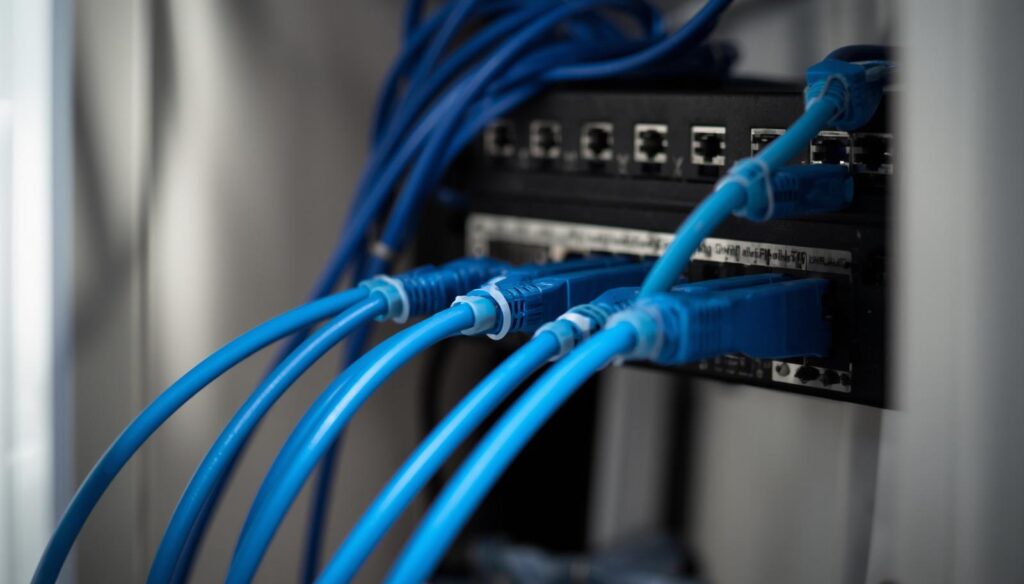
Ethernet Installation Cost in Houston: 2026 Per-Drop Pricing
A “drop” is one cable run from your network hub to a wall outlet in a room. Here’s what each type typically costs:
| Drop / bundle type | Houston-area range | Best for | What’s included |
|---|---|---|---|
| Single Cat6 drop (retrofit) | $175–$450 per drop | One office, one TV, one desktop | One run to a room outlet, keystone jack, wall plate, termination at the hub, basic testing |
| Grouped Cat6 drops (2–6 rooms) | $140–$325 per drop | Bedrooms + office, media wall | Shared routing, jacks and plates in each room, termination at a common hub, testing |
| Cat6a (per drop) | $200–$550 per drop | 10-gig plans, high-interference areas | Cat6a cable and rated jacks, longer pull time, testing |
| Small-office bundle (8–24 drops) | $160–$425 per drop | VoIP phones, printers, workstations, access points | Termination to a labeled patch panel, tidy cable management at the rack |
| Testing, labeling & documentation | $50–$250+ per job | IT handoff, future troubleshooting | Port labels, simple documentation, optional certification testing |
These ranges assume a standard retrofit: a one- or two-story home with workable attic pathways, a reasonable distance to the network closet, and standard termination. However, long exterior-wall runs, tight drilling angles, and finished walls with no attic access above them push jobs toward the high end.
What Drives Ethernet Installation Cost in Houston
Materials are the cheap part. A box of Cat6 and a handful of keystone jacks cost roughly the same whether the job is easy or brutal. Labor is where the price moves, and three things drive it:
Fishing difficulty. Most Houston-area homes sit on slab foundations, so cable can’t go under the house. Instead, it goes through the attic. If your attic has decent clearance and the wall you’re wiring has a straight path down from the top plate, the run goes fast. But if we’re dropping into a first-floor wall of a two-story home, we have to find a chase, a plumbing wall, or a closet corner to get past the second floor. That’s the difference between a 45-minute drop and a three-hour one.
Distance to the hub. Every run terminates back at one central point, usually a closet, utility room, or structured media enclosure. A bedroom directly under the attic hatch is a short run. A detached garage office on the far side of the house, meanwhile, is not.
How many drops share the trip. Every drop we do in the same visit shares the setup, ladder work, and attic time. As a result, grouped drops price lower per drop than a single isolated run. It’s not a discount gimmick, it’s just shared mobilization.
Cat6 vs Cat6a: Is the Upgrade Worth It in a Houston Home?
For most homes, Cat6 is the right call. Per the TIA-568 cabling standard, Cat6 handles gigabit at any residential run length and supports 10 gigabit up to about 180 feet, which covers nearly every run inside a typical single-family house. It’s also thinner and more flexible than Cat6a, which matters when you’re fishing tight wall cavities.
Cat6a costs more per drop for a reason: the cable is thicker and stiffer, it takes longer to pull cleanly, and terminations are fussier. Here’s where it earns the premium:
- Long runs where you want full 10-gig headroom, not “10-gig if the run is short enough”
- Areas with heavy electrical interference, like runs bundled near a panel or along conduit-dense office ceilings
- Small offices planning denser bundles and future switch upgrades
If you’re on the fence, here’s the honest tiebreaker: the labor to open walls is the expensive part, and you only want to pay for it once. So if there’s a real chance you’ll want 10-gig everywhere within the life of the house, spend the extra $50 to $150 per drop now. If you’re wiring for streaming, gaming, work calls, and mesh Wi-Fi backhaul, Cat6 will not be your bottleneck. For context, the FCC’s household broadband guide pegs even heavy multi-user households well under what a single gigabit line delivers.
And no, you almost certainly don’t need Cat8. It’s built for short data-center runs, not homes. That said, if you have a specific 25 or 40-gig plan, bring it up at quote time and we’ll design around the gear.
Why a Single Drop Costs More Per Drop Than Whole-Home Wiring
A single retrofit drop carries the full weight of the visit: drive time, ladder and attic setup, hub-end termination, and cleanup, all for one cable. Add a second, third, and fourth room, though, and most of that overhead is already paid for. That’s the biggest lever you control over your ethernet installation cost in Houston: bundle rooms instead of adding them one at a time.
Because of that, the most cost-efficient way to wire a house is a priority-room bundle. The pattern we quote most often in Fort Bend County looks like this:
- Your home office first, because video calls hate Wi-Fi
- The media wall or main TV
- Any bedrooms where streaming or gaming stutters
- One or two ceiling drops for Wi-Fi access points — the single best thing you can do for whole-house Wi-Fi 7 performance, and something we can pair with Wi-Fi router configuration so the network is dialed in before we leave
Six to twelve drops with a centralized hub in a closet or utility room covers most homes. On top of that, many homeowners add a run or two for hardwired cameras while the pathways are open, since wired security camera installation shares the same routing work. You can always add drops later, but each one added alone costs more than it would have inside the bundle.
Residential vs Small-Office Network Cabling Costs
Office jobs price differently because the finish requirements change. A home install ends at wall plates and a tidy hub shelf. An office install, by contrast, usually needs:
- Patch panel termination with every port labeled, so your IT person isn’t guessing which cable feeds which desk
- Plenum or riser-rated cable where the National Electrical Code (NFPA 70) requires it in ceiling air-handling spaces
- After-hours scheduling so we’re not drilling over someone’s sales calls
- Documentation for future moves, adds, and changes
We quote offices at two finish levels: a basic install, or a “ready for IT handoff” scope with the panel, labels, and documentation included. For VoIP, printers, workstations, and ceiling access points across 8 to 24 drops, expect that $160 to $425 per-drop range depending on ceiling type and finish level.
Can You Run Ethernet Yourself and Save the Money?
Sometimes, honestly, yes. If you have an unfinished garage wall or an exposed run, DIY is reasonable. Cable and jacks are cheap.
Retrofits into finished walls, however, are where DIY costs people money. There are two failure modes we get called to fix: terminations that test fine but drop packets under load, and exploratory holes in drywall that now need patch and paint, which costs more than the drop would have. Attic work in a Houston summer is its own tax, too; from June through September, that space runs 130°F-plus by mid-morning.
A fair way to decide: get the free quote first. If your run turns out to be an easy one, we’ll tell you, and then you can weigh the DIY savings against a tested, warrantied finish with real numbers instead of guesses.
What a Legitimate Quote Should Include
You can’t compare bids if you don’t know what each one covers. Any quote you accept, from us or anyone else, should spell out:
- Drop count, cable type (Cat6 or Cat6a), and exact outlet locations
- Where every run terminates, and whether that includes a patch panel
- What testing the installer performs before close-out
- What’s excluded, which is where surprise change orders live: drywall repair and paint, specialty firestopping, conduit, rack buildouts, and switch or router configuration are commonly separate line items
We put all of this in a written scope of work with range-based pricing, so the number you approve is the number you pay. Similarly, if you’re comparing us against other Houston low-voltage outfits like DataWire Solutions, Wolverine Low Voltage, Tailwind Voice and Data, or Zion Communication, send us their scope and we’ll quote the identical one so the comparison is apples to apples.
How the Install Works
- Quick call or form. Tell us the rooms, rough drop count, and whether you’re leaning Cat6 or Cat6a. You can also book online and skip the phone entirely.
- Free quote. Next, we confirm pathways, hub location, and outlet placement, on-site or from photos.
- Install day. Run, terminate, plate, and tidy the hub area. Most residential bundles finish in a day.
- Test and handoff. Finally, we verify every line before we leave, and you get a walkthrough of what’s where.
If you’re wiring ahead of a move-in date or a remodel deadline, book early. Those calendar windows compress fast.
Frequently Asked Questions
How much does it cost to install ethernet in one room?
Ethernet installation cost in Houston for a single Cat6 drop typically runs $175 to $450 in 2026. The range is wide because one room can be a 30-minute attic drop or a two-story fish through finished walls. In other words, distance to your network hub and wall access set the final price.
Is Cat6 or Cat6a better for a home in Texas?
Cat6 covers gigabit at any home run length and 10-gig up to roughly 180 feet, which fits most Houston-area floor plans. Choose Cat6a for long runs where you want guaranteed 10-gig, or for high-interference areas. Expect Cat6a to add $50 to $150 per drop.
Does whole-home ethernet wiring cost less per drop?
Yes. Grouped drops in the same visit share setup, attic time, and hub work, which brings per-drop pricing down to roughly $140 to $325 for Cat6. A single isolated drop, on the other hand, carries all of that overhead alone.
Do slab-foundation homes cost more to wire?
Not usually, as long as there’s attic access. Slab homes in Fort Bend County route through the attic instead of a crawlspace, and most single-story layouts wire efficiently that way. First-floor walls in two-story homes are the runs that add labor.
Does the price include drywall repair?
We design our installs so you rarely need it, and the quote states exactly what we cover. Industry-wide, though, drywall patch and paint are standard exclusions, so always confirm this line item before accepting any bid.
Get a Free Quote for Ethernet Installation in Houston
We quote network cable installation across Houston, Katy, Sugar Land, Richmond, Rosenberg, and Fort Bend County. Ultimately, the fastest way to pin down the exact ethernet installation cost in Houston for your specific rooms is a free quote. To speed it up, send us:
- Your general area, the rooms you want wired, and a rough drop count
- Your preferred hub spot (closet or utility room) and Cat6 vs Cat6a preference, if you have one
- Photos of the hub area, the attic access, and any wall you’re worried about
- Any gear already in play: router, switch, patch panel, or access points
.